
Filming begins on ‘Rafaela’, the debut feature film by Alba Lozano, produced by Baleuko, 11 Varas, 100 Acres, La Claqueta PC and Caviar
Filming has begun on ‘Rafaela’, the debut feature film by Alba Lozano. The film will be shot in Basque over six weeks at locations in Bilbao, Durango, Dima, Karrantza, Elorrio, Olazabal, Atxarte, Artaza and Munoa, among others.
Key members of the technical crew include Aitor Mendilibar as director of photography, Victoria de la Vega as production designer and Arantza Ezkerro as costume designer. Editing is handled by Pepa Roig, while the original score is composed by Beatriz López-Nogales.
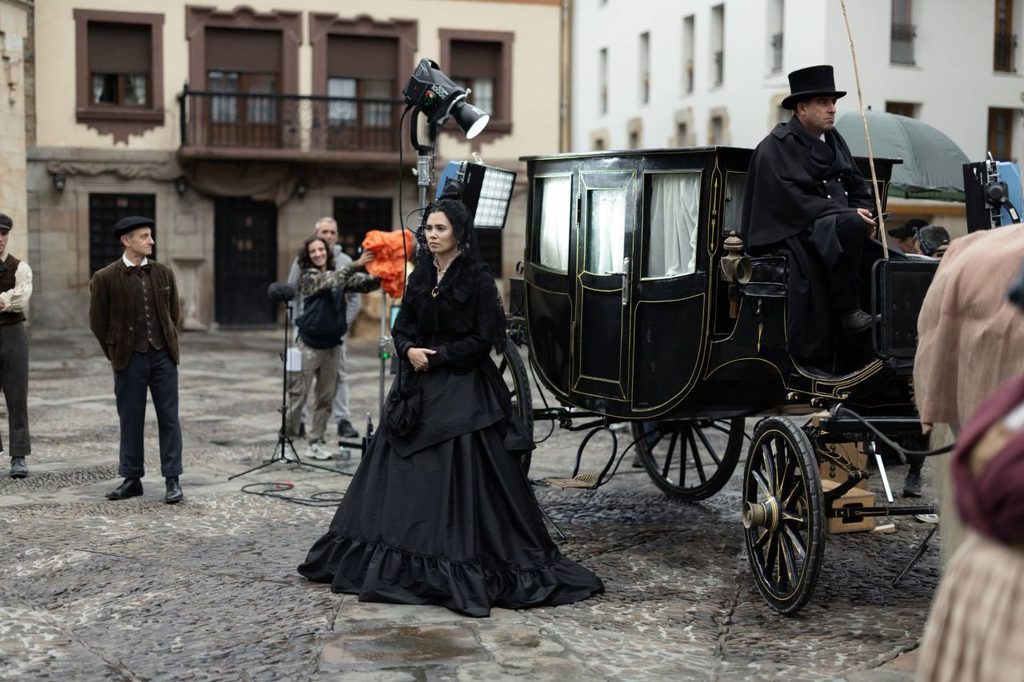
‘Rafaela’ is produced by Baleuko, 11 Varas, 100 Acres and La Claqueta PC, in co-production with Belgian company Caviar. The film features the participation of EITB and RTVE, and is funded by the Basque Government, the Provincial Council of Bizkaia and the ICAA, with sponsorship from Peris Costumes and EFD Studios.
‘Rafaela’ will be released in cinemas by distributor A Contracorriente Films, while international sales are handled by Picture Tree. With a budget of more than four million euros, the film received one million euros in funding under the ICAA’s first general funding allocation procedure of 2026.
“I’m interested in exploring the need to defend our ideals, but also to question our own privilege. Although the story takes place in the late 19th century, I find contemporary issues in it: what responsibility we have towards our privileges, how we defend what we believe in, and what happens when we dare to question the position from which we do so,” comments Alba Lozano.
This historical drama, set in Bilbao in 1889, stars Loreto Mauleón (‘La buena letra’), Nerea Sanz (‘Mi querida señorita’) and Miguel Garcés (‘Los domingos’). The cast also includes Arnatz Puertas and Ekia Izco, among others.
The film revisits the story of Rafaela Ybarra, a woman from Bilbao’s upper bourgeoisie who decided to use her social standing and fortune to protect and educate girls and young women in vulnerable situations. Written by Candela Izquierdo, Leire Albinarrate and Gemma Urraka, ‘Rafaela’ creates a dialogue between past and present through issues such as social inequality, education, women’s autonomy and different ways of understanding social commitment.
Rafaela Ybarra was born in Bilbao in 1843 into a family belonging to the industrial upper bourgeoisie. Throughout her life, she devoted much of her resources and efforts to protecting and educating young women and children in vulnerable situations, becoming one of the pioneers of social work in the Basque Country. A philanthropist and deeply religious woman, she founded the Congregation of the Holy Guardian Angels. She was beatified in 1984 by Pope John Paul II. She is popularly known as “the mother of Bilbao”. The film approaches this historical figure through her contradictions: a woman who does not renounce her faith or social standing, but chooses to use them to intervene in a profoundly unequal society.
Synopsis
Bilbao, late 19th century. In a city divided between immense wealth and widespread poverty, Rafaela Ybarra, a woman from high society, defies her social circle by taking in two young women who are surviving in a brothel. Convinced that she can offer them a future, she puts her fortune and faith at the service of a cause that will soon shake her own life. For Catalina, one of the young women, refuses to accept the future Rafaela has envisioned for her. As mining strikes rock the city, a bond develops between the two women, challenging their convictions and leading Rafaela to question the rules of the world to which she belongs.