
Landa arrives in cinemas: a documentary about the first actor to give his name to a film genre
Alfredo Landa died in 2013, but he left behind a remarkable cinematic legacy, including a type of film that gave rise to its own genre, known as ‘landismo’. Now, a documentary looks back at both his artistic career and his personal life.
Landa, the documentary directed by Gracia Querejeta and Miguel Olid, which aims to fill “a gap that existed” in the story of the first actor to give his name to a film genre, ‘landismo’, arrives in cinemas this Friday, offering audiences a deeper insight into one of Spanish cinema’s most important figures.
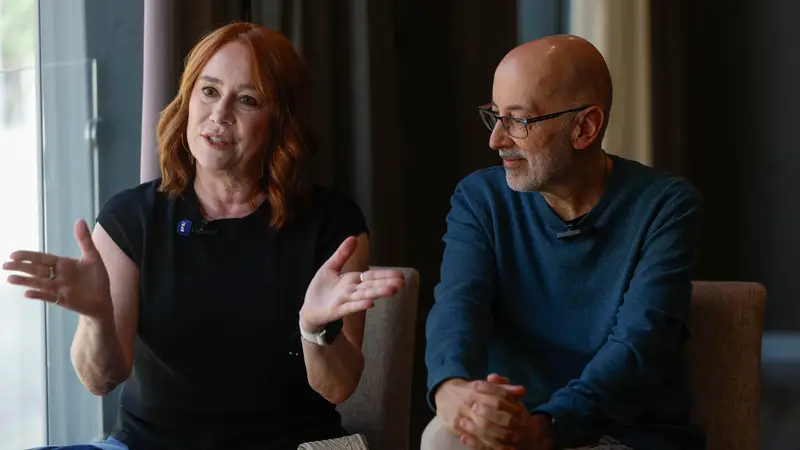
Speaking to EFE during the presentation of their work at the recent Málaga Film Festival, both directors explained that they had made “the documentary Alfredo Landa deserved”.
The documentary begins with ‘landismo’, which José Sacristán describes as “a chronicle of Spain at that time”, reflecting conservative, sexist and homophobic values. According to Querejeta, it was a genre in which “people made jokes about things that would be unthinkable today”.
“I’m not your husband, but I’m going to slap you…” Landa snapped at Concha Velasco in a scene from Las que tienen que servir (1967), because, as Querejeta points out, those were times when “hitting women was considered normal”.
Olid, meanwhile, explains that their intention was to “approach ‘landismo’ honestly, without being complacent or trying to justify it, but without condemning it either”.
Educating the country
The filmmakers drew on TVE’s archives to include excerpts from interviews with Landa. In one of them, the actor expresses his frustration at the negative connotations attached to landismo and calls for the country to be “educated”, arguing that, as society evolves, “a different kind of cinema will emerge”.
For Landa, that different kind of cinema arrived with El puente (1977), directed by Juan Antonio Bardem, a filmmaker with very different political views who had recently been released from Carabanchel prison following his involvement with the Spanish Communist Party (PCE). Nevertheless, Bardem chose the Navarre-born actor “for a story that was the complete opposite of ‘landismo'”, Olid emphasises.
He adds that Landa remained “eternally grateful” to Bardem because “he changed the course of his career”.
“That is what makes an actor like him so remarkable. Not every actor I direct has the ability to do everything, and some have a more limited acting range. It is extraordinary that someone can move between such different characters”, Querejeta observes.
In collaboration with Plano Subjetivo, Baleuko and Sílex Ediciones.
The successor
The documentary’s directors even venture to suggest who, given his qualities, could be considered Alfredo Landa’s successor in contemporary Spanish cinema: Javier Gutiérrez.
“He has also played more comedic and larger-than-life roles and, looking at both their careers, he is another actor with an exceptionally wide acting range”, Querejeta explains.
Alongside the aforementioned José Sacristán, fellow actors such as Antonio Resines and Miguel Rellán share their memories. Offering a more personal perspective are Landa’s children, Idoia and Alfredo, who, according to the directors, have been “involved and fully committed” to the project from the very beginning.